Hybrid Battery Module Testing System
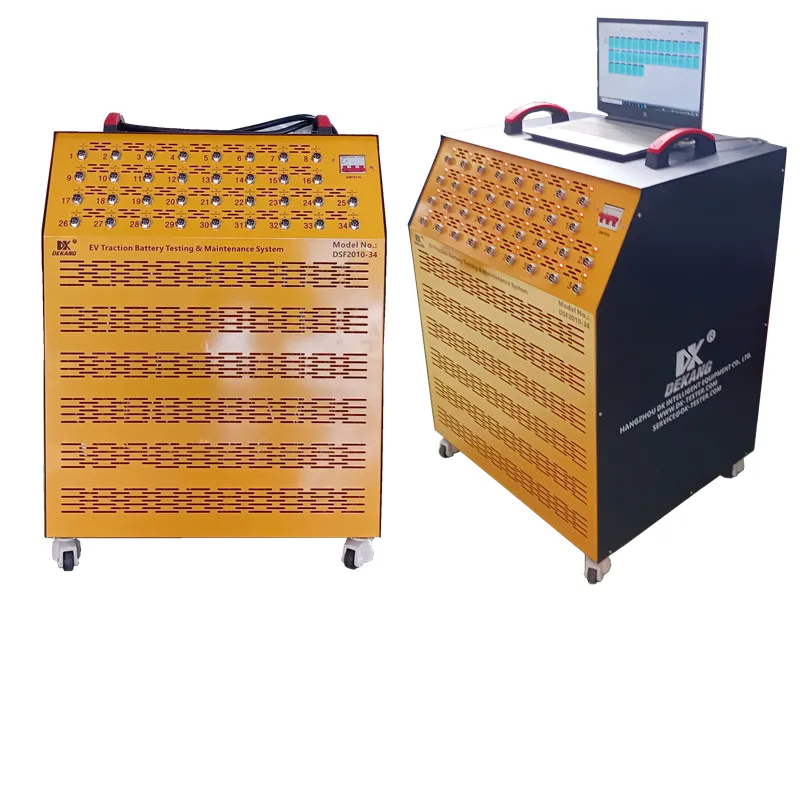
For hybrid service teams, a hybrid car battery tester such as the HBT2010-34 supports capacity checks, charge and discharge testing, data grading, matching, and balance maintenance for NiMH, lithium, NiCd, and lead-acid batteries. The same system works as an EV battery charge discharge tester for 4.8V, 7.2V, 9.6V, and 14.4V hybrid battery modules, with isolated channels and temperature-based stop settings for unattended testing.
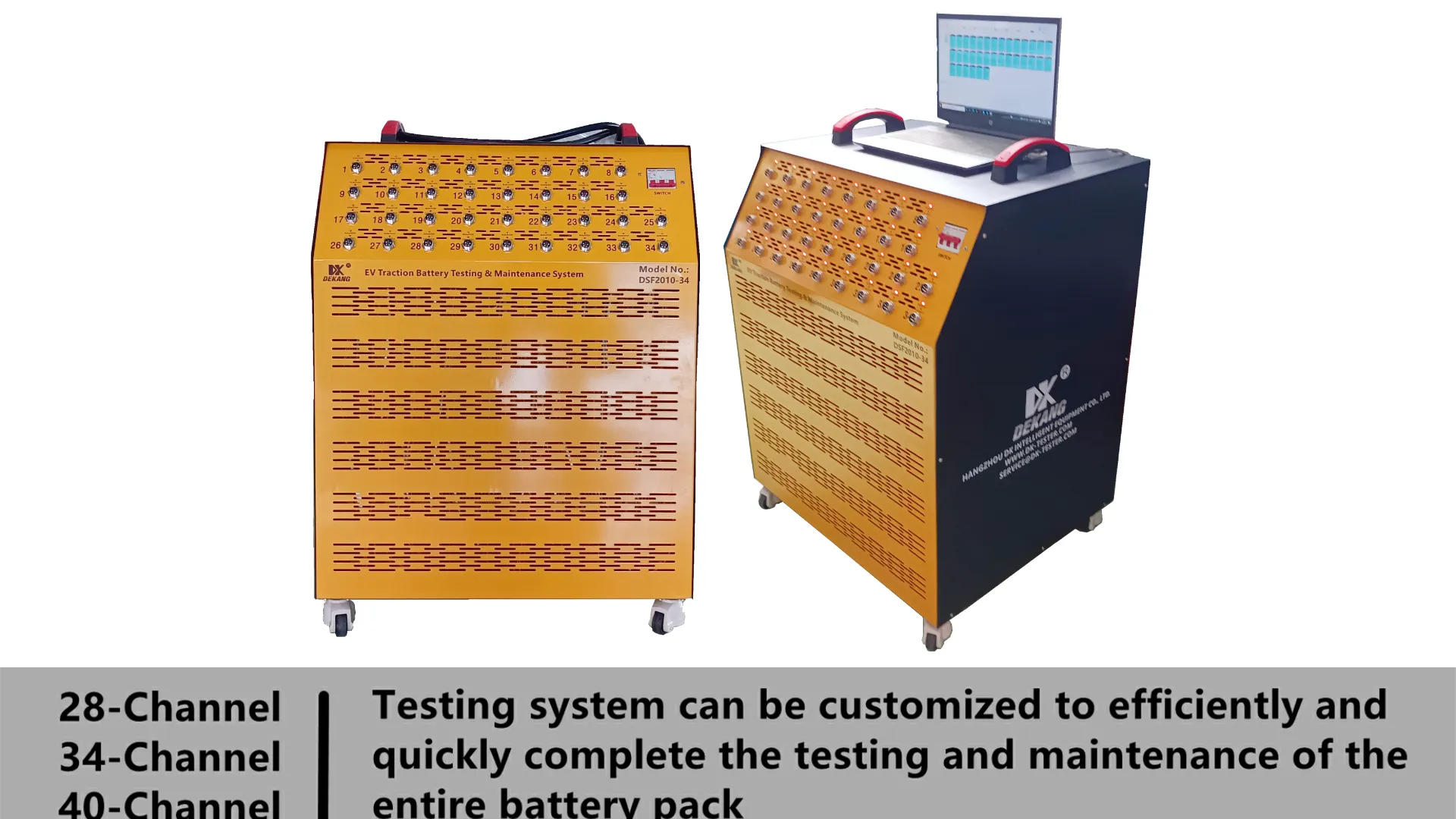
Built for Hybrid Battery Service and Module Testing
The Hybrid Electric Car Ni-MH/Lithium Battery Auto Cycle Charge and Discharge Balance Maintenance Testing System is listed as item HBT2010-34. It is intended for capacity testing, charge characteristic testing, data grading and matching, balance charge/discharge maintenance, and internal resistance testing of NiMH, NiCd, lithium, and lead-acid batteries.
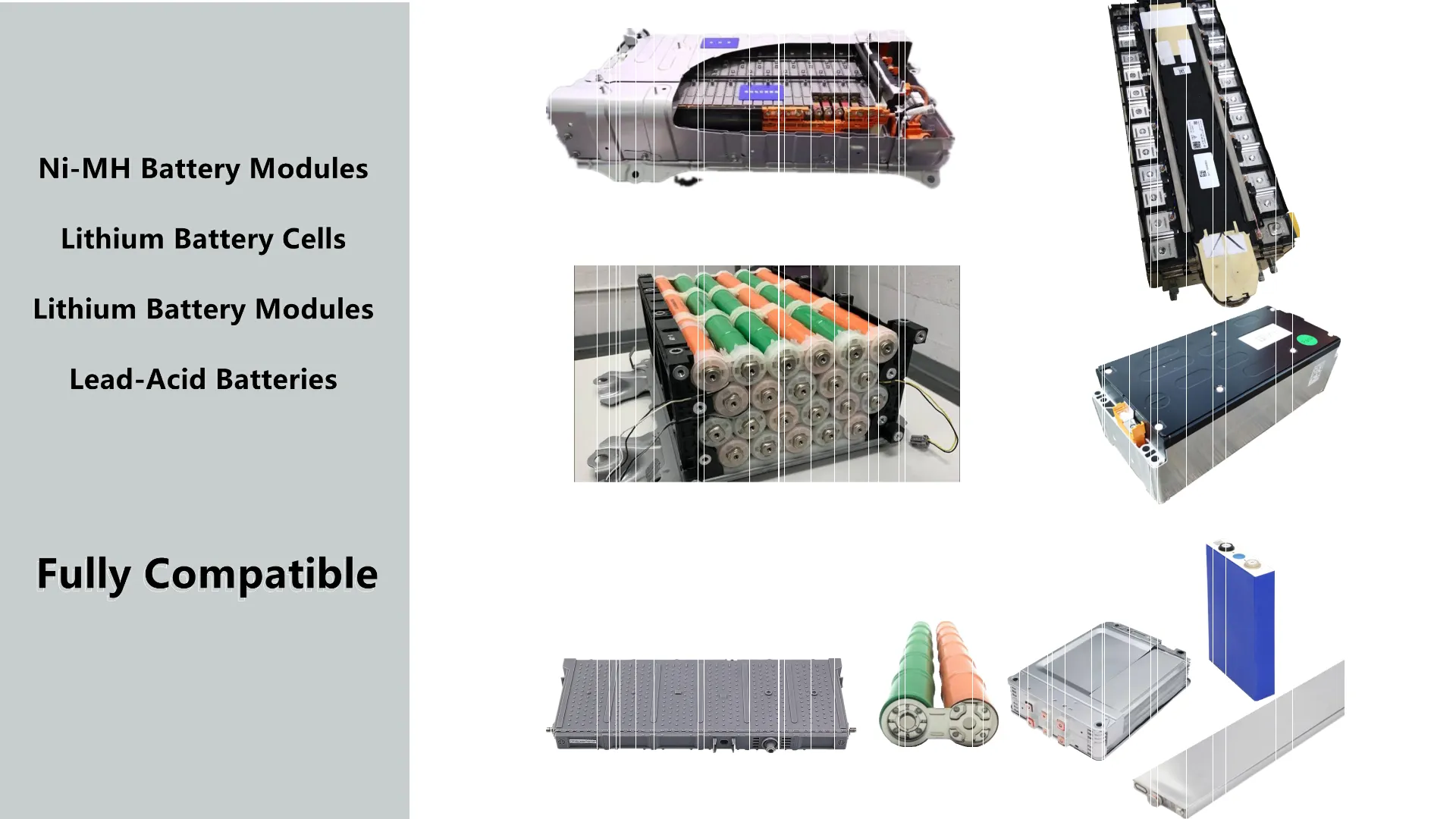
The system is also listed as compatible with lead-acid, Li-ion, polymer, Ni-MH, and NiCd batteries. For EV maintenance and service work, the application information highlights hybrid battery modules at 4.8V, 7.2V, 9.6V, and 14.4V, and names Honda, Toyota, Lexus, Nissan, Ford, and Porsche hybrid models.
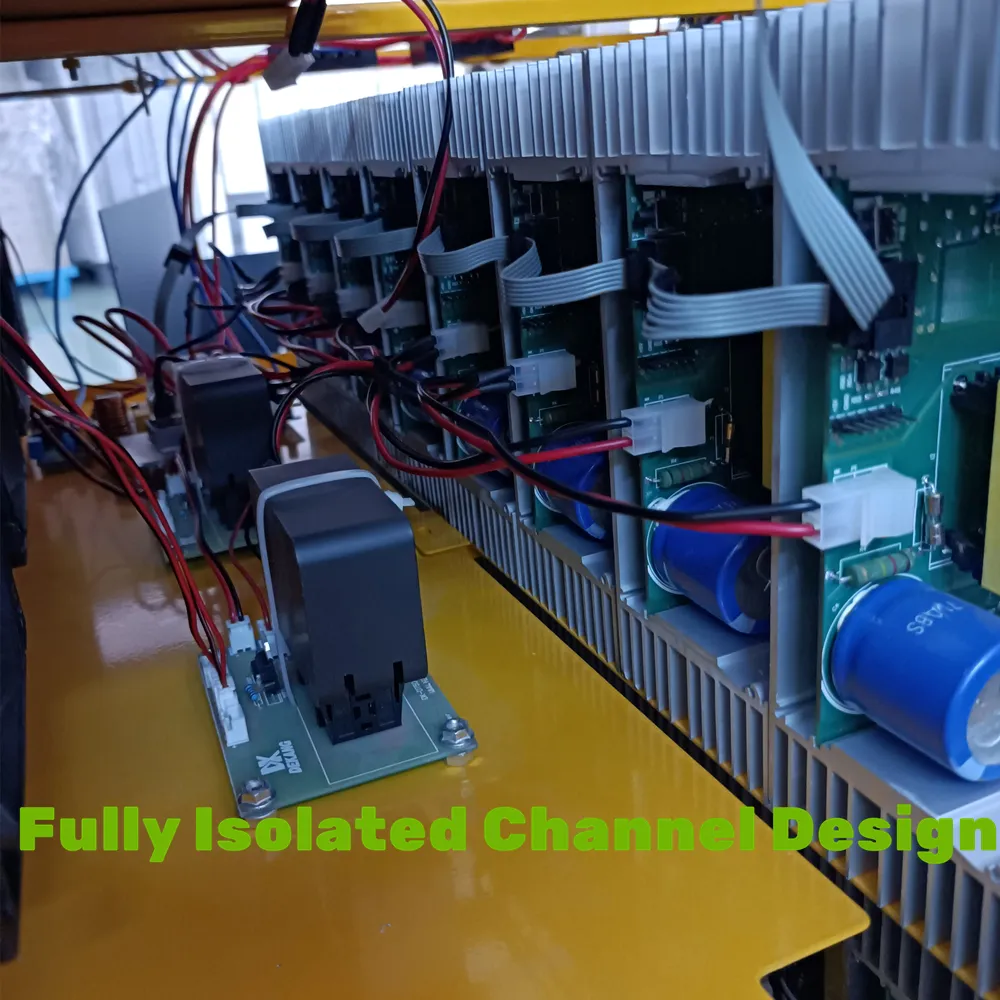
- All channels are isolated and can directly test cells of the battery pack.
- Isolation detection technology can determine the location of defective modules without disassembling the battery pack.
- Each channel has a dedicated processor for capacity calculation, timing, voltage, and current control.
- An independent heat source channel, temperature control, and speed-regulation fan are included.
- Work steps include constant current discharge, constant power discharge, constant resistance discharge, constant current charge, constant voltage charge, constant current and voltage charge, internal resistance test, and idle.
- Charge and discharge parameters can be customized, and matching can follow a customized standard.
Specifications for HBT2010-34
Review the summary configuration and the technical table together. The product information shows both a summary input power and a separate technical input voltage; confirm the required supply configuration before ordering.
Summary configuration
| Input Power | AC200V~245V50/60HZ |
|---|---|
| Applicable Batteries | Lead-acid/Li-ion / Polymer / NiMH / NiCd batteries |
| Con-Voltage Range | 2V-20V |
| Current Output | 0.5A-10A |
| Operation Method | Online |
| Communication Port | LAN |
| Channel No. | 28/34/40 channels |
The summary block lists AC200V–245V 50/60Hz input power, while the technical table lists 3-phase 380V 50Hz/60Hz input voltage and no-load/full-load power. Both values are shown as published; confirm the required configuration before ordering.
Technical specification
| Model No. | HBT2010-34 |
|---|---|
| Input Voltage | 3-Phase 380V 50Hz/60Hz |
| Input Power | No-load 100W, full load 7820W |
| Charge Constant Voltage Range | 2 V – 20 V adjustable |
| Discharge Cut-off Voltage Range | 2 V – 20 V adjustable |
| Voltage Tolerance | ± 0.02 V |
| Charge Current | 0.05 A – 10 A adjustable |
| Discharge Current | 0.05 A – 10 A adjustable |
| Charge Cut-off Current | 0.05A – 5 A |
| Current Tolerance | ± 0.02 A |
| Max. Output Power (Single Channel) | 230 W |
| Data Recording Conditions | Time interval; Voltage interval; Current interval |
| Charge Modes | Constant current charge; Constant voltage charge; Constant current & voltage charge |
| Charge Cut-off Conditions | Voltage, Current, Time, Capacity, -△V, Temperature |
| Discharge Modes | Constant current discharge; Constant power discharge; Constant resistance discharge |
| Discharge Cut-off Conditions | Voltage, current, time, capacity |
| Cycle Index | 1–5000 times |
| Protection | Power-down protection; Reverse connection; Over-temperature protection; Over-voltage protection; Short-circuit protection |
| IP Grade | IP20 |
| Channel Control Mode | Independent control |
| High Voltage Insulation Between Channels | AC1000V/2min |
| Normal Voltage & Current Test Sampling | Four-core wires connection |
| Noise | < 76 dB |
| Host Computer Communication | Method based on TCP/IP protocol |
| Test Report Output Method | Excel |
| Server Disk Configuration | >100GB |
| Server Operation System | Windows XP, Windows 7/8/10 |
| Communication Port | LAN |
| Operation Ambient Temperature | 0 ℃ – 40 ℃ |
| Storage Temperature | -10 ℃ – 50 ℃ |
| Operation Ambient Humidity | ≤ 70 % RH (No condensation) |
| Storage Ambient Humidity | ≤ 80 % RH (No condensation) |
| Produce Size | 70*60*85 CM (L*W*H) |
| Weight | 115 kgs |
Decision Guide: Is the HBT2010-34 the Right Fit?
Match the system to your battery mix, module voltages, channel workload, and facility power. The points below use only the published product details.
Multi-channel module work
With 28/34/40 channels and independent control, the system is aimed at EV maintenance and service work where multiple cells or modules need testing, grading, or matching.
Balancing and internal resistance
The system can balance charge and discharge an unbalanced battery pack and restore it to normal balance. It also supports capacity testing, data grading and matching, and internal resistance testing.
Voltage, current, and power checks
Charge and discharge voltage ranges are 2V–20V, and charge and discharge currents are 0.05A–10A. Confirm the summary input power and the technical input voltage against your facility supply.
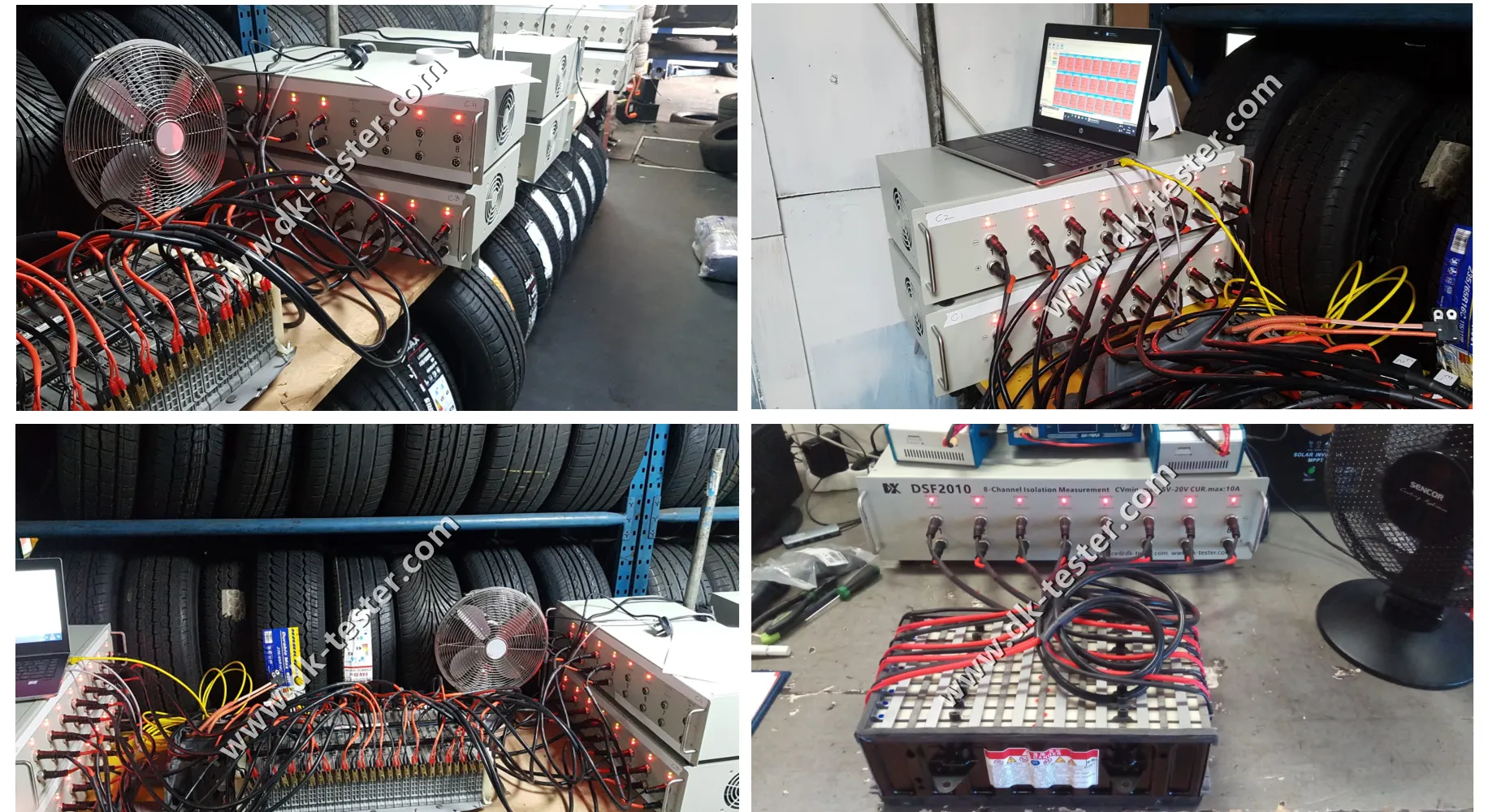
Use Cases in EV and Hybrid Battery Maintenance
The HBT2010-34 is listed for EV maintenance and service industries, especially for hybrid battery modules at 4.8V, 7.2V, 9.6V, and 14.4V.
Typical work includes capacity testing, charge characteristic testing, data grading and matching, balance charge/discharge maintenance, and internal resistance testing. The application information names Honda, Toyota, Lexus, Nissan, Ford, and Porsche hybrid models.
The integrated Battery Temperature Monitoring System allows work-step switching and charging stop to be set by temperature for unattended testing or maintenance. Test process recording and Excel report output help keep service records organized.
- Test cells directly from the battery pack with isolated channel testing.
- Use isolation detection to locate defective modules without disassembling the battery pack.
- Run online testing between a computer and the device through the LAN communication port.
- Use LED indicators for running, testing, matching, and alarm status.
Verification and Safety Checks
The system includes channel isolation, tolerance values, protection functions, and status reporting that support repeatable battery service checks.
Each channel is controlled independently and isolated from the others. High voltage insulation between channels is listed as AC1000V/2min, and normal voltage and current test sampling uses four-core wires connection. Voltage tolerance is ±0.02V and current tolerance is ±0.02A.
Protection features include power-down protection, reverse connection protection, over-temperature protection, over-voltage protection, and short-circuit protection. Battery anti-reverse connection protection and alarm are also listed.
- Charge cut-off conditions include voltage, current, time, capacity, -△V, and temperature.
- Discharge cut-off conditions include voltage, current, time, and capacity.
- Cycle index can be set from 1 to 5000 times; data recording can use time, voltage, or current intervals.
- Three Y-axis curves show voltage, current, and capacity with a time axis, plus a data report function.
- IP20 rating, operating ambient temperature 0℃–40℃, and noise below 76 dB.
Review the HBT2010-34 for Your Battery Service Work
See the product page for details, or contact the team with your battery chemistry, module voltage, and testing requirements.
Related Products
Keep adjacent product options together for a faster catalog comparison.
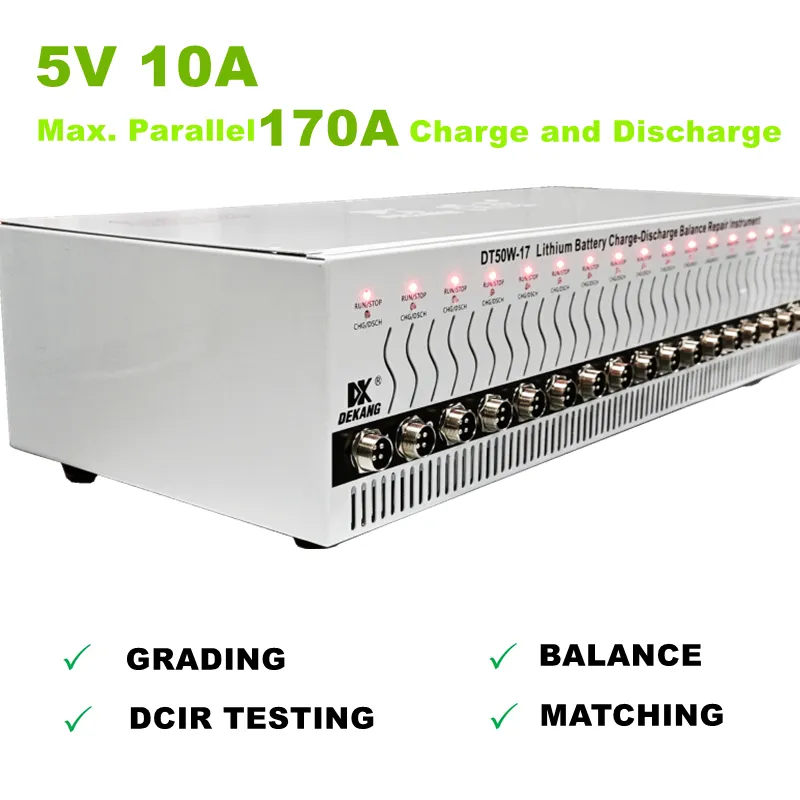
5V 10A Li-Ion Cell Capacity Grading Charge Discharge Tester
The Li-ion Cell Tester DT50W-17 is an advanced battery testing equipment for precise lithium-ion cell testing.
View product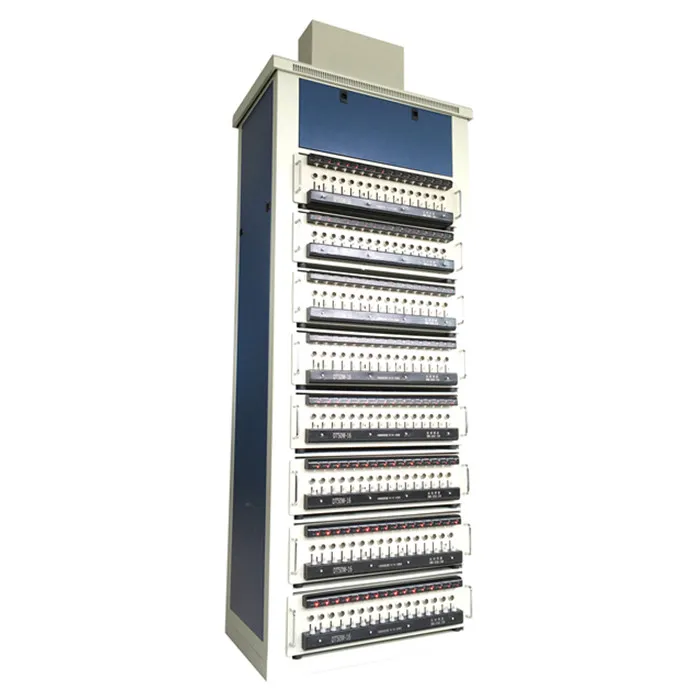
Lithium Cell Capacity Grading And Matching Charge Discharge System DT50W-128
The Li-ion Cell Capacity Grading and Matching Charge Discharge Tester 113 is designed for accurate capacity testing and cell matching.
View product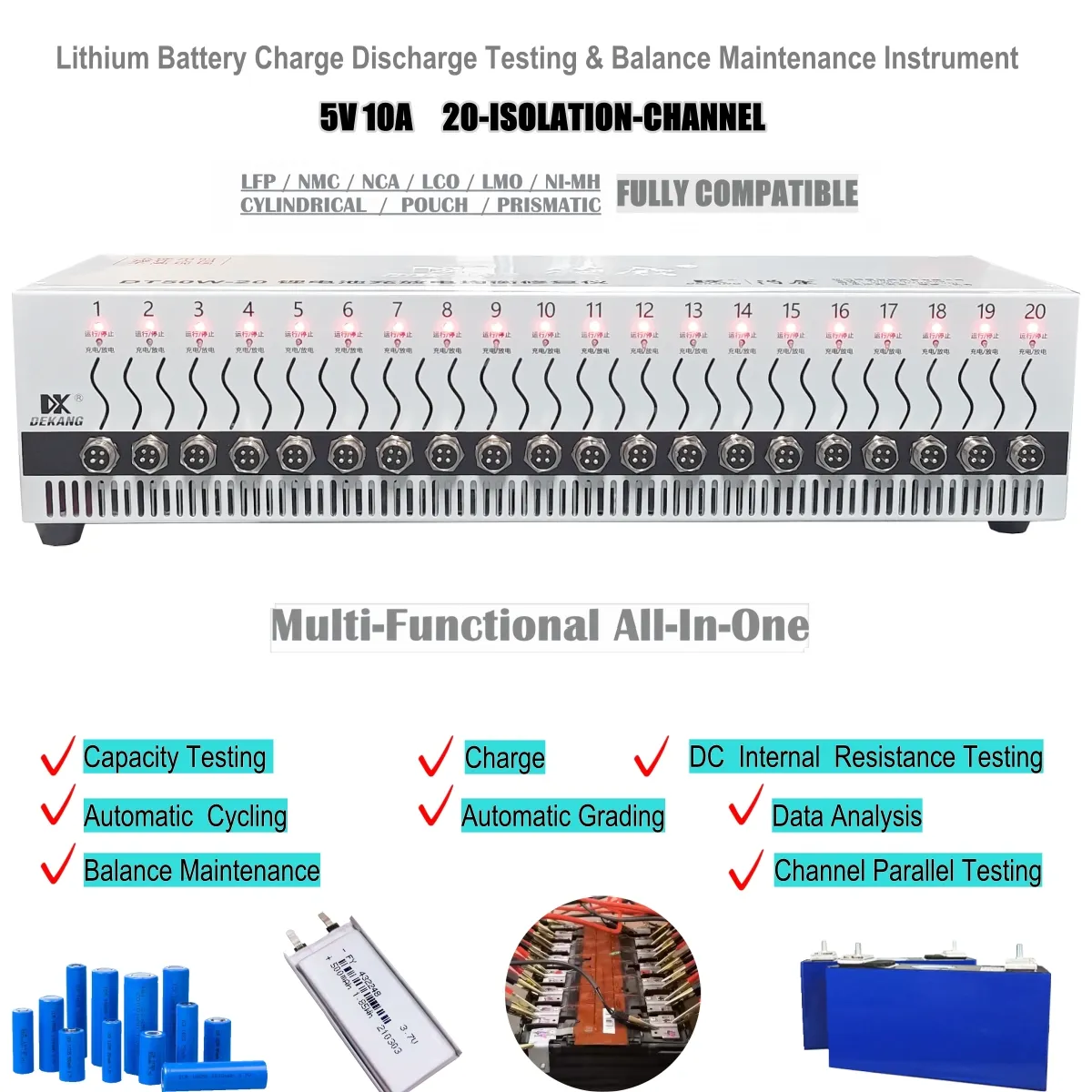
20-Channel 5V 10A Lithium Cell Charge Discharge Testing and Balance
The 5V 10A Li-ion Tester DT50W-20 provides precise and fast testing for lithium-ion cells, making it the perfect solution for battery test equipment manufacturers and battery testers.
View productFrequently Asked Questions
what battery chemistries can this system test?
the system is listed for lead-acid, li-ion, polymer, ni-mh, and nicd batteries.
which hybrid battery module voltages are listed?
the application notes list hybrid battery modules at 4.8v, 7.2v, 9.6v, and 14.4v.
what charge and discharge modes are available?
charge modes include constant current, constant voltage, and constant current and voltage. discharge modes include constant current, constant power, and constant resistance.
how does isolation detection help service work?
isolation detection can determine the location of defective modules without disassembling the battery pack.
what safety protections are included?
protections include power-down, reverse connection, over-temperature, over-voltage, and short-circuit protection, plus battery anti-reverse connection protection and alarm.
what reports and communication options are supported?
the system supports lan communication, online testing between a computer and the device, test process recording, and excel report output with three y-axis curves for voltage, current, and capacity.